The State of America's Direct Support Workforce Crisis 2026
7 Black Activists Who Shaped Disability Rights



This article originally appeared in SETWorks’ blog on January 27, 2026.
Black History Month is a time to honor leaders and events that shaped the fight for equity in the United States. At the same time, it’s a reminder of how deeply connected the Disability Rights Movement is to the broader struggle for civil rights.
For instance, many of the strategies used in the Disability Rights Movement, such as nonviolent protests, sit-ins, and economic boycotts, were inspired by the Civil Rights Movement. Likewise, landmark Civil Rights victories like the Voting Rights Act helped expand opportunities for people with disabilities as well.
In this article, we’ll highlight seven notable Black leaders and activists who advanced the fight for dignity, access, and equity.
1. Brad Lomax
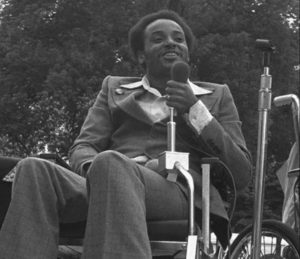
One of the clearest examples of how the Civil Rights Movement and Disability Rights Movement are intertwined is Brad Lomax. Lomax played a key role in the 1977 Section 504 sit-ins, a weeks-long protest demanding that the government enforce protections for people with disabilities.
As a member of the Black Panther party, Lomax used his connections to organize daily meals for protestors — support that made it possible for the sit-in to continue. By bringing civil rights strategies like coalition-building and collective action into the Disability Rights Movement, he helped push forward changes that continue to shape accessibility and inclusion today.
2. Dennis Billups
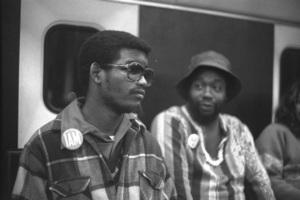
Alongside figures like Brad Lomax and Judy Heumann, blind activist Dennis Billups helped lead the 28-day protest that ultimately forced the federal government to enforce long-overdue disability rights protections. Though his name is less widely known, his leadership was critical to the sit-in’s success.
Billups, who was only 24 years old at the time, was encouraged to attend the protest by his twin sister Deborah, who was also blind. He soon became known as the “spiritual leader” of the sit-in, keeping participants motivated through cheering, singing, and late-night conversations. “I was just making sure that we had our minds together to keep going forward and don’t look back,” Billups reflects on his role.
3. Fannie Lou Hamer
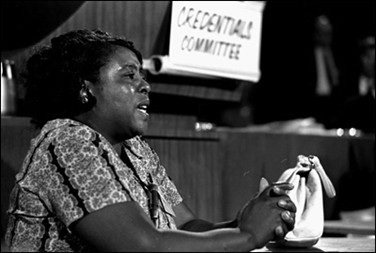
Fannie Lou Hamer was a leader of the voting rights movement whose activism was shaped by disability as well as race. After contracting polio as a child, she lived with a limp that was permanently worsened when she was beaten by police in 1963 while trying to register to vote. The assault left her with other lasting injuries, including kidney damage and vision loss.
Hamer went on to help found the Mississippi Freedom Democratic Party and testified at the 1964 Democratic National Convention about the suppression of Black voters. Her testimony was rebroadcast nationally and helped pave the way for the Voting Rights Act the following year, a landmark legislation that helped remove barriers like literacy tests and poll taxes and expand access to the ballot box for both Black Americans and people with disabilities.
4. Willie Mae Goodman
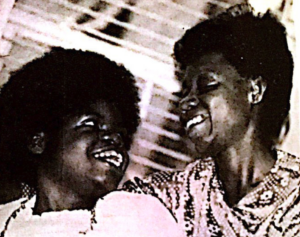
Willie Mae Goodman was a Black disability rights activist who challenged institutionalization and fought to give people more choices for community living. Her advocacy began when her daughter, Marguerite, was institutionalized at Willowbrook State School in New York, where she and other students faced overcrowding, neglect, and abuse.
Goodman founded the Gouverner Parents Association, a group of mostly Black and Latinx parents who played a key role in closing institutions like Willowbrook.
Reflecting on the fight for better options, Goodman drew parallels to her childhood in the segregated South: “We were told you can drink water from this fountain. One said ‘colored,’ and the other said, ‘white’. Not that we wanted to drink the water from that fountain, but we felt we should have the opportunity to choose.”
5. Louise B. Miller

Louise B. Miller was a Black disability rights advocate whose fight for her Deaf children challenged both racial segregation and disability barriers to education. In the 1950s, segregation policies forced Black Deaf students in Washington, D.C., to attend schools far from home, often at their families’ own expense.
Miller and other Black parents challenged these policies in Miller v. Board of Education of the District of Columbia, arguing that Black students should not be forced to leave their district to receive an education white students could access locally. The case laid important groundwork for later civil and disability rights protections, including the Individuals with Disabilities Education Act (IDEA).
6. Donald Galloway
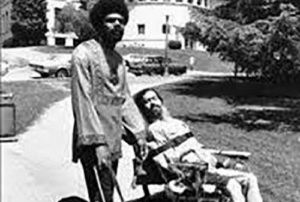
Donald Galloway was a blind disability rights advocate who played a key role in ensuring people of color were represented in the Disability Rights Movement. In the early 1970s, he served as director of services for blind people at the Berkeley Center for Independent Living (CIL), where he advocated for minority representation and encouraged the center to build stronger connections with organizations like the Black Panthers.
Galloway’s most lasting contributions came through his advocacy in the courts, where he successfully challenged laws that barred blind people from serving on juries and from working in the U.S. Foreign Service. His work helped push the disability rights conversation beyond physical accessibility to full participation in civic and public life.
7. Lois Curtis
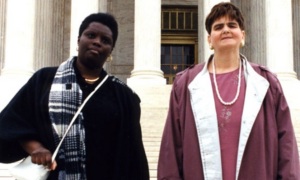
Lois Curtis is best known as the lead plaintiff in Olmstead v. L.C., the 1999 Supreme Court case that affirmed the right of people with disabilities to live in the community. Curtis, who lived with intellectual and developmental disabilities, had been involuntarily institutionalized from the age of 11.
Her case drew on Brown v. Board of Education, the landmark decision that overturned “separate but equal” in schools, to argue that segregating people with disabilities was discriminatory. The court agreed, ruling that “unjustified isolation … is properly regarded as discrimination based on disability,” and requiring states to provide services in the most integrated setting possible.
The decision helped shift support for people with disabilities from institutional care to community-based services and showed how the Disability Rights Movement built on the legal groundwork laid by the Civil Rights movement.
Breaking Down Barriers Together
The disability rights movement wouldn’t be what it is today without the leadership and persistence of Black activists. From historic sit-ins to landmark court cases, their work laid the foundation for policies and protections that still matter today. Honoring Black History Month reminds us that disability rights and racial justice are deeply connected, and that progress happens when communities come together to break down barriers.
Anna Spexarth is the Marketing & Communications Manager at SETWorks.
Stay Informed on the Latest Research & Analysis from ANCOR
More News
REV UP Offers Election Resources for Voters with Disabilities Ahead of Midterms