
Connections - 01.30.26

Make the Case for Inclusion: Use the Data Snapshot to Enhance Your Advocacy in 2026
Share this page

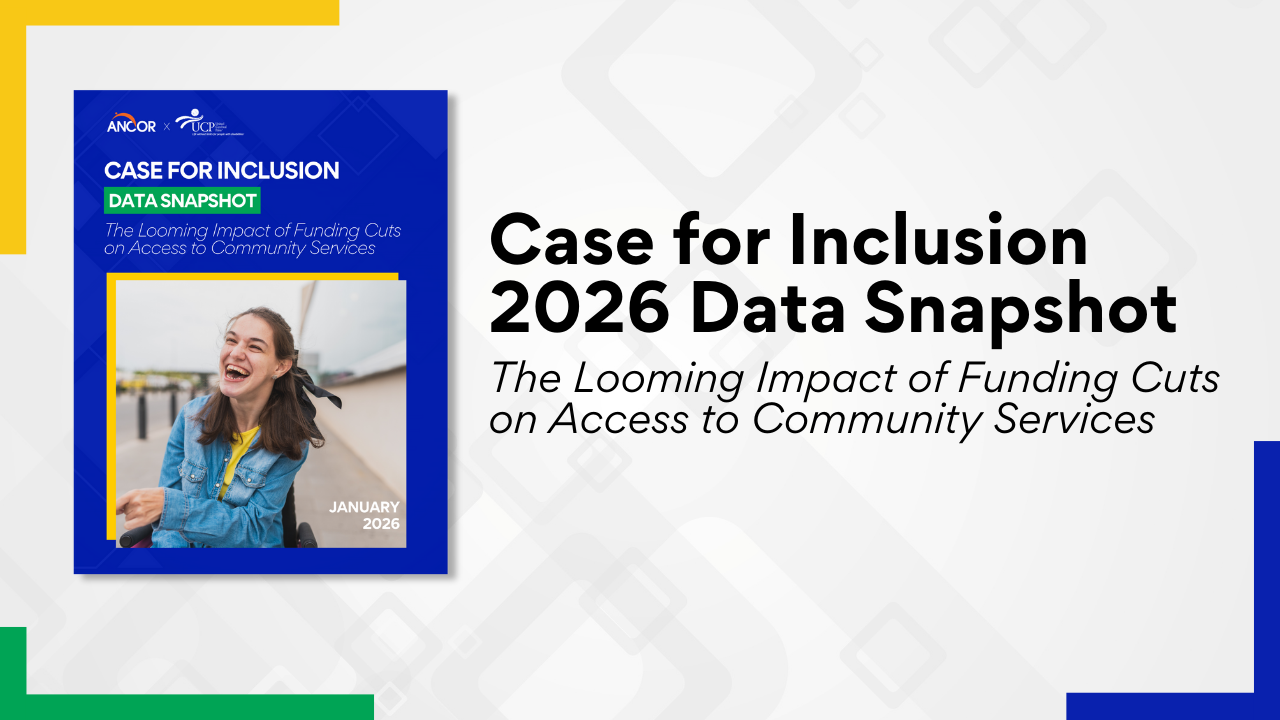
On January 14, ANCOR and United Cerebral Palsy (UCP) released the latest Case for Inclusion Data Snapshot, offering a targeted update on how states are supporting people with intellectual and developmental disabilities (I/DD) and their families, as well as the serious risks now facing those services.

This new report reveals that:

  • Median hourly wages for direct support professionals (DSPs) increased from $15.79 in 2022 to $17.20 in 2023.
  • Nationally in 2023, the average turnover ratio was 39.7%, marking the first time the national turnover ratio dropped below 40% since data collection began in 2014.
  • Average vacancy rates for DSPs were 12.2% and 14.6% for full- and part-time positions, respectively.
  • 552,339 people with IDD in the US were on their state’s waiting list for I/DD services in 2025, representing an increase of 8% over the previous year.

Access to home and community-based services remains out of reach for an increasing number of people with I/DD. This is due to workforce shortages, chronic underinvestment by state and federal governments, and long waiting lists. The enactment of the 2025 budget reconciliation bill included nearly $1 trillion in cuts to federal Medicaid funding, increasing the instability of community-based services, threatening to shrink provider networks, and slow progress on workforce stabilization.

As our latest Case for Inclusion Data Snapshot shows, it’s crucial that lawmakers invest in community-based I/DD services. Below are three ways you can take action today using the findings in the Data Snapshot to help make the case for stronger investments in 2026:

1. Make the case that community-based services support economic growth.

Community-based services help grow a community’s economy by creating jobs for DSPs, keeping family caregivers in the workforce, and helping people with I/DD build the necessary skills to live and participate in their communities. When states support people in their homes and communities through community-based services, rather than large, expensive, state-run institutions or nursing homes, their investments go further.

  • Take Action: In letters to state and federal legislators, highlight how community-based supports help your local economy and share stories of how services have enabled people with disabilities to live, work, and thrive in your community.

2. Make the case for increased investments in community-based I/DD services.

As state lawmakers across the country begin their budget work and when Congress turns their attention to fiscal year 2027 appropriations this spring, you can use the Data Snapshot to explain to legislators that access to community-based I/DD services is already limited, and that funding cuts or flat budgets will inevitably translate into longer waits and fewer supports.

  • Take Action: In posts on social media, share with legislators how underfunding services can lead to long waiting lists and how community-based I/DD services are essential infrastructure that keeps people with disabilities in their communities.

3. Make the case for better DSP wages.

The Data Snapshot shows that improved wages for DSPs result in reduced turnover and better access to services for people with I/DD, while also highlighting that, despite recent gains, DSP wages still lag far behind living wages.

  • Take Action: In meetings with state and federal legislators, share how DSP wages directly impact workforce stability and access to services for people with I/DD. While wages rose to a national average of $17.20 per hour in 2023, DSP wages continue to fall short of living wage benchmarks in every state.

By taking these actions and engaging your legislators, you can make an impact in the fight for a better and more sustainable future for community-based services supporting people with I/DD.